Yuèshān-guan is read Gassankan in Japanese — while internal martial arts training is my primary focus, I continue to practice classical sword methods (kenpō) from Japan I learned before moving to Seattle. I do so indepenently. The name I used for my overall approach is Shin-no-shinkage Heihō — it is a synthesis of multiple influences described below.
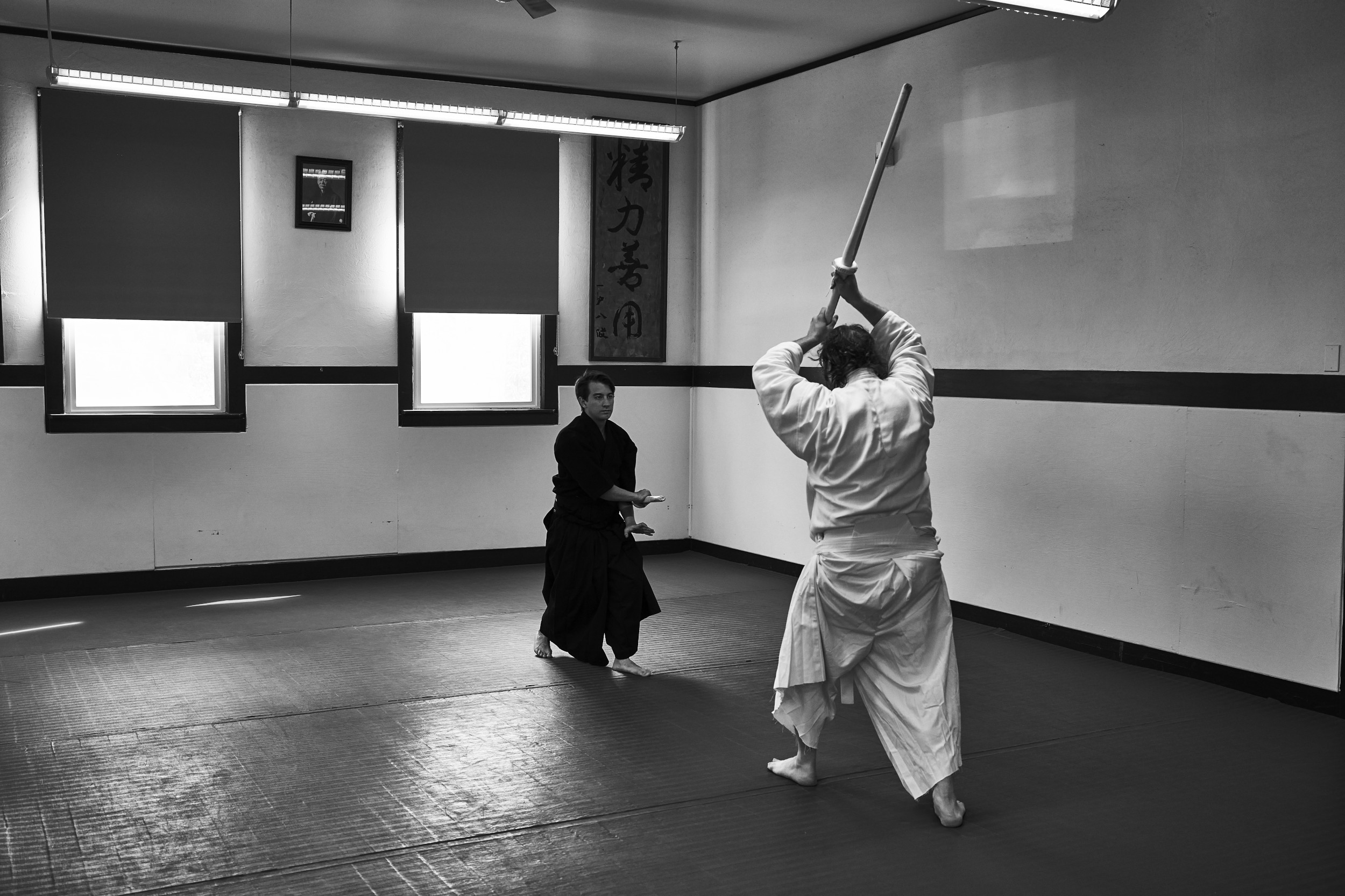
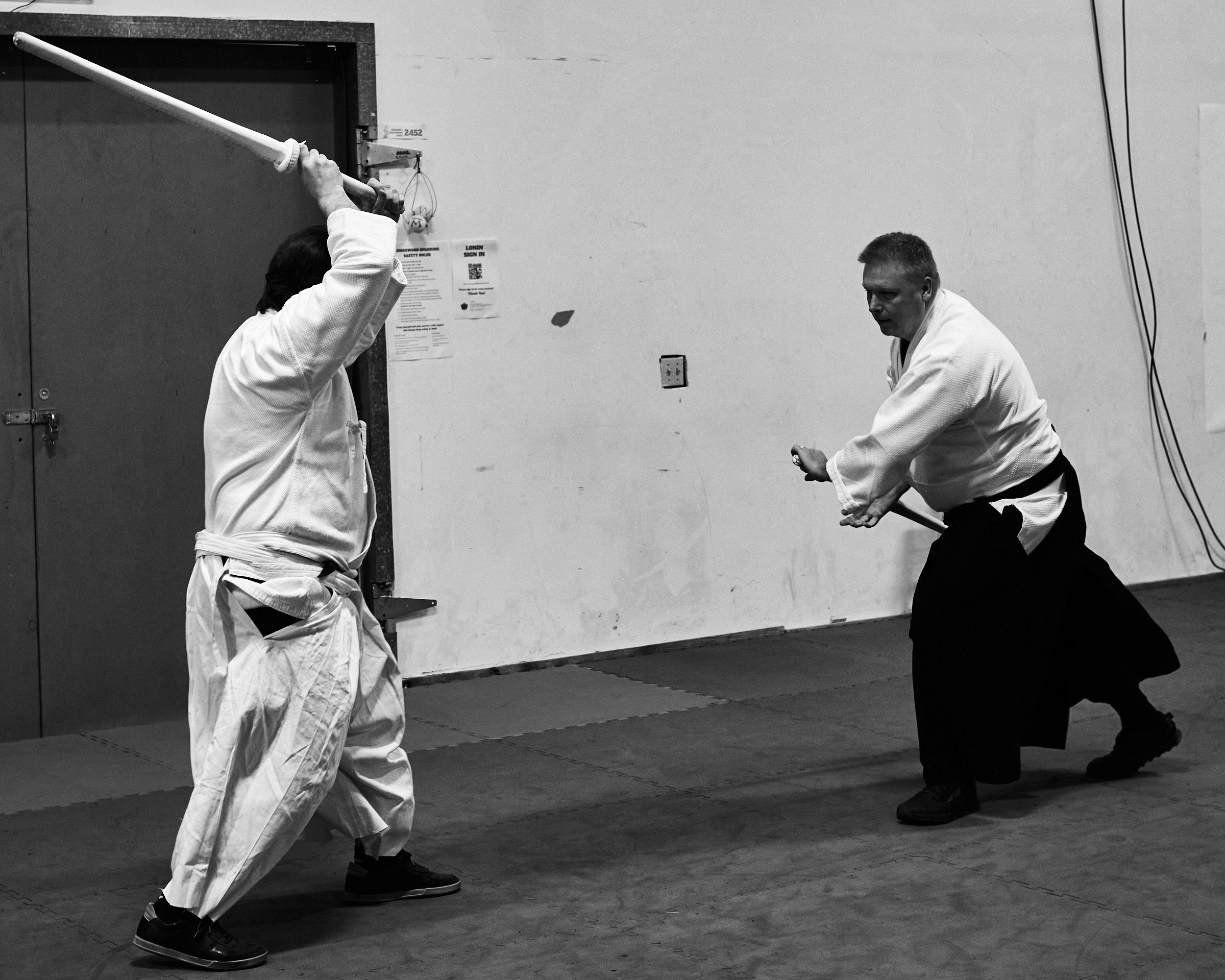
I was awarded a chuden license associated to my study of Kashima-shinden Jikishinkage-ryū from 2008 to 2016 by David Hall, founder of the Hōbyōkan, in 2018. I hold a mokuroku license awarded in 2010 that is associated to my practice of Katori Shintō-ryū at Capital Aikikai from 2005 to 2015. I also have studied portions of the older curriculum of Shinkage-ryū.
After moving to Seattle in 2016, I continued to work on the classical sword methods I had learned at the Hōbyōkan and Capital Aikikai. Eventually, I started working with a small number of people to continue my practice of Jikishinkage-ryū kata.
The product of this effort is Tōsha Dōjō (
- Foundational walking and cutting practices.
- Four seasons arrangement of foundational kata.
- Tactical exchanges performed with leather-wrapped shinai.
- Analysis of kata in a process of deconstruction (kuzushi).
- Free practice called jigeiko.
I continue to mentor this activity as time permits. Inquiries can be made through Lonin at the link above.