Inner Dharma at Twenty
Reflecting on twenty years of writing on martial arts and culture.
Early Influences: 1982-2004
As a youth, I practiced Shukokai Karate in Elizabeth, New Jersey, and then a mixture of Aikidō, Judō, and Nippon Shorinji Kempō after moving to NYC.
In the 1990s I attended workshops on Yagyū Shinkage-ryū and Daitō-ryū and engaged in friendly sparring with friends who practiced Chinese martial arts, but did not stray far from my core practice. I told myself that in good time, when my skill at taijutsu was refined, I would learn a Chinese martial art like Baguazhang or Bajiquan.
In 2004 I visited a koryū enbu, a demonstration of classical Japanese martial arts, at the St. Louis Botanical Garden. Schools such as Tenshin Shōden Katori Shintō-ryū, Shindō Muso-ryū Jo, Araki-ryū Torite Kogusoku, Tenshin Buko-ryū Naginata, and Yagyu Shinkage-ryū Heihō were represented. Each of these seemed to have a more subtle and refined method of practice than the rough and tumble methods I had been first taught in NYC.
There, while talking with Ellis Amdur, he asked me what was next for me, since I had recently been awarded the highest level of certificate in my current style. I told him about my desire to learn Baguazhang, and he told me he knew of teachers in Maryland – in fact, he had practiced Xingyiquan while in Japan under Su Dongchen, and was interested in its sister art of Gao Lineage Baguazhang.
Ellis introduced me to Bob Galeone, a Karate and Aikidō teacher who had learned Gao Bagua from Allen Pittman and Paul Cote in the lineage of Hung Yimien, a student of Zhang Junfeng. I began training in Gao Bagua with Bob in 2004. I subsequently received feedback on my training from Paul Cote and also Su Dongchen during his Essence of Evolution seminars in Minneapolis.
Bob was a senior Aikidō disciple of Kanai and Saotome and working with him has been a very important gift in two parts. His own efforts to understand the implications of Bagua on his Aikidō practice has helped me first understand my first practice was actually an independent self-defense oriented Aikidō school. Conversations with Clyde Takeguchi later helped inform me of the provenance of many of the techniques I knew – variants of Aikidō techniques practiced by Tohei Koichi and Saito Morihito, dating my teacher's teacher's training in 1950's era Aikidō. These influences allowd me to begin to refine the practice I had first learned into something more realistic and effective.
Bob also introduced me to Paul Cote's Wu Taijiquan class he was attending as well as the kenjutsu group practicing at Capital. I began learning Wu Taijiquan and the Yin and Liu Baguazhang Paul was teaching in Damascus and New Market, and eventually started going to Pittsburgh to learn Xingyiquan from Paul's teacher Zhang Yun.
Inner Dharma: 2004-2024
Much of my earlier writing on Inner Dharma was concerned with the process of shifting from practicing modern goshin-jutsu influenced by Aikidō to cultivating internal skill. I also furthered my understanding of the context in which I first trained. As I learned more of Bagua, Xingyi, and Taiji I reflected on the relationships between the concept of aiki and traditional internal martial arts training. Over time, as my skill at internal martial arts progressed, I let my original Aikidō and Kempō practice go.
I began studying classical Chinese and Japanese weapons arts concurrently. Inner Dharma later served as a platform to document my comparative analysis of traditions such as Shintō-ryū and Shinkage-ryū, and to contrast historical methods with modern approaches. Through the exploration of kata, technical variation, and eventually combative pressure testing, I refined my focus and resolved to integrate and unify these insights.
The name of my continued practice is
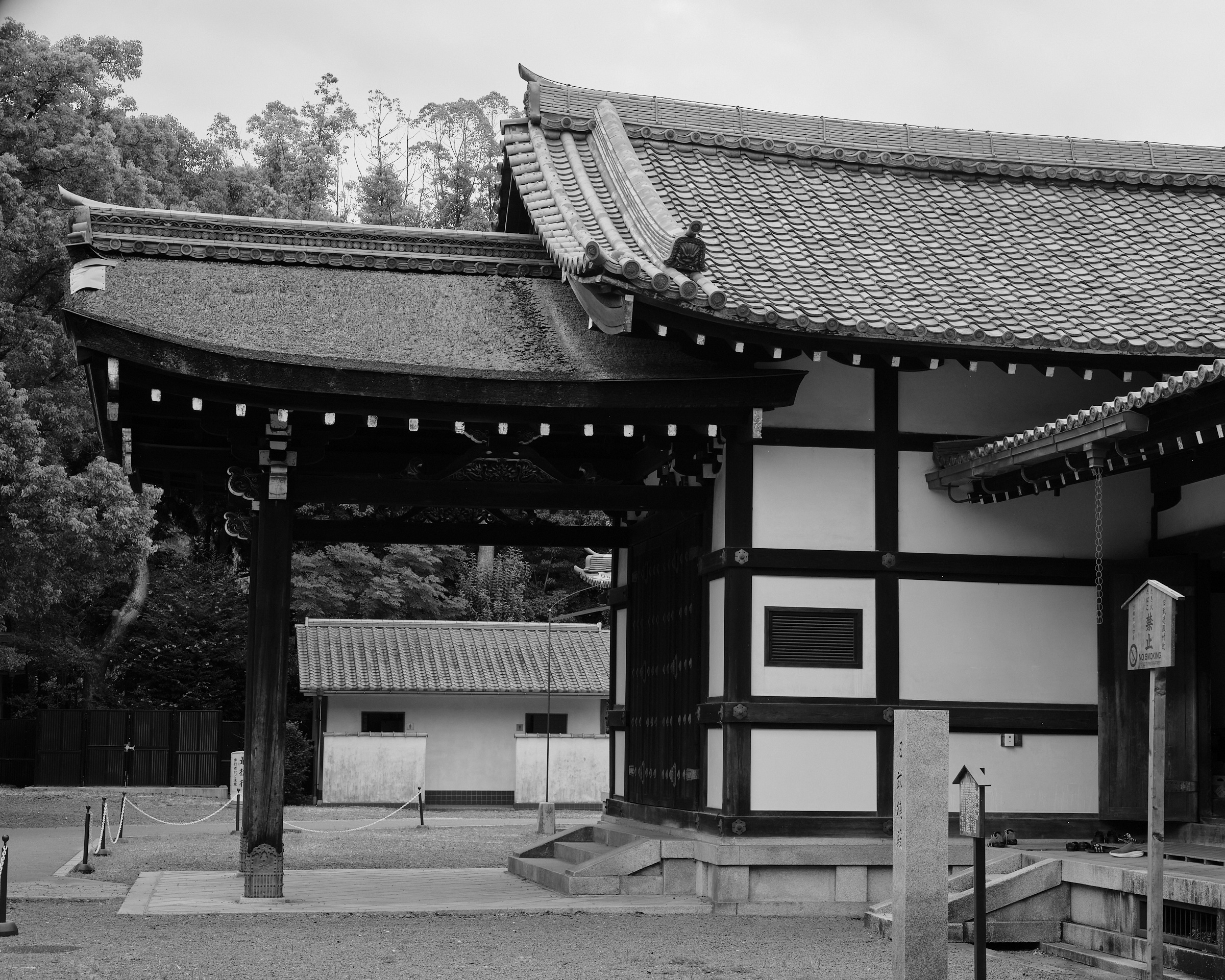
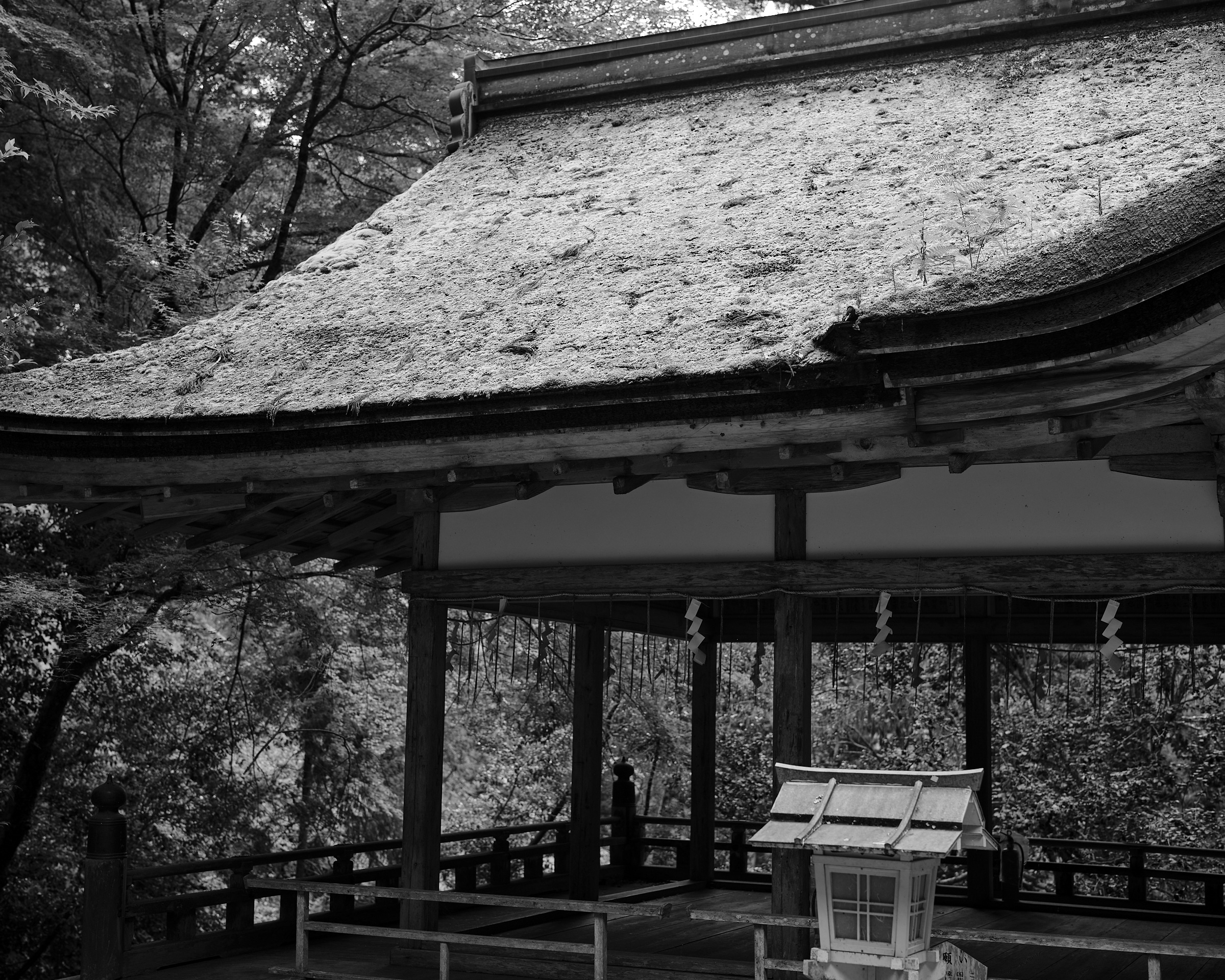
Twenty years after this project began in Dewa, I visited Kyoto, including the seat of Honzan-ha Shugendō not far from the Kyoto Budōkan (the site of the Meiji-era Butokukan) as well as the shrines and temples at Kuramadera, an area associated with several important martial arts figures from Japanese history.
I spent time thinking about my continued endeavors and came to the realization
I needed to focus on continuing to develop my skill at
traditional internal martial arts.
In cultivating a more withdrawn approach to my study,
I am reminded that the final level of practice of
Jikishinkage-ryū, called marobashi or marubashi (
The phrase hyakuren jitoku (
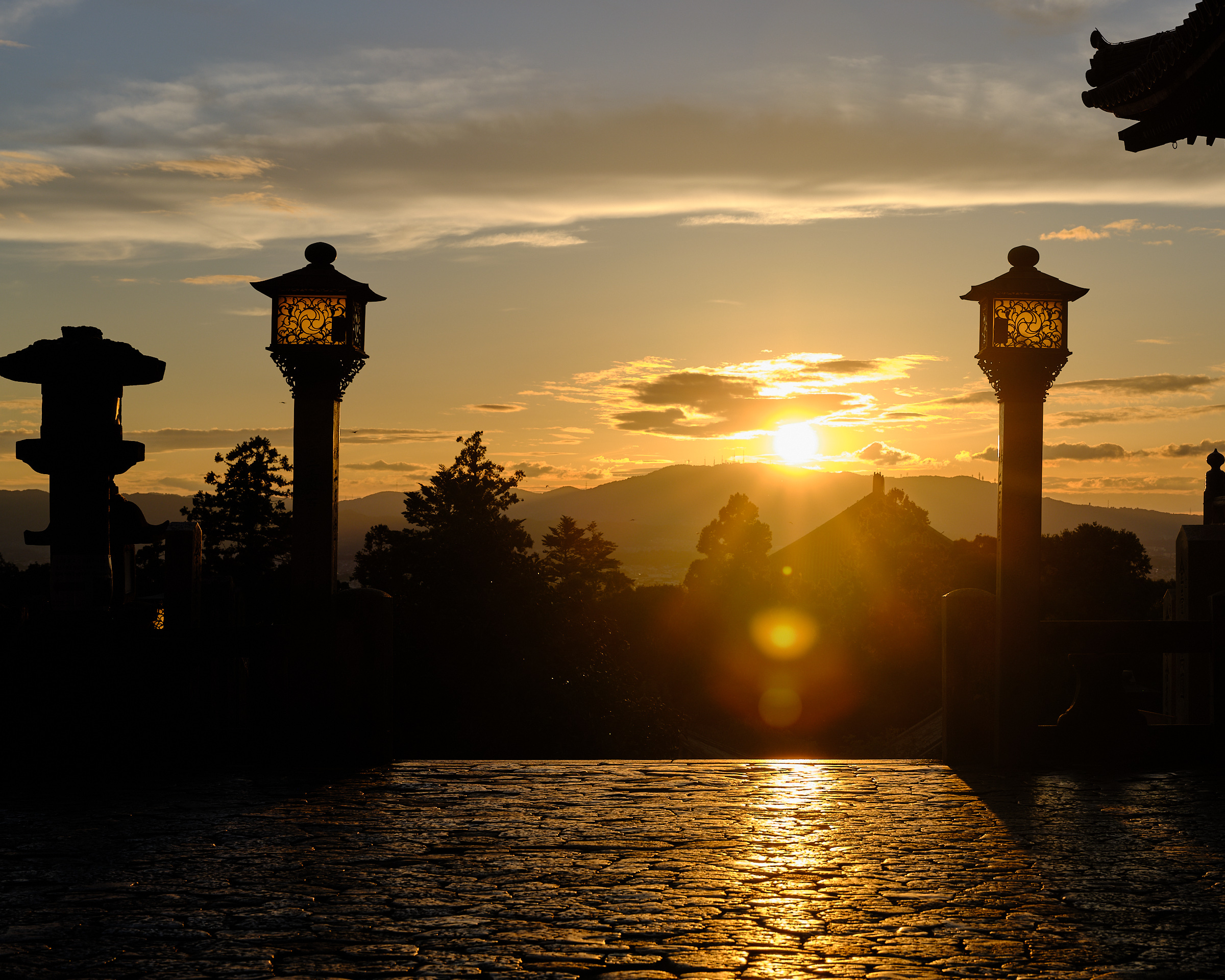
Over time I more strongly feel that each person needs to walk their own path and come to their own decisions about where and how best to train. Looking out from the veranda of the Nigatsu-do, above Todaiji in Nara, I came to the realization that I had completed the journey that started with Inner Dharma in Dewa twenty some odd years ago. In closing, I want to thank the readers of this blog for their feedback and encouragement and wish you all the best with your training.
Shugyō
One challenge I have faced over the last ten years is, having moved to Seattle, what exactly to preserve from my training. I've done my best to continue my internal martial arts training, and I wound up sharing some of my knowledge of kenjutsu with a small number of people.
While I have had short correspondence with masters of Jikishinkage-ryū in Japan, I never succeeded in developing a strong enough social connection with any of them to approach them to learn more of the art than I had first been exposed to at the Hōbyōkan. I instead incorporated free-practice in to my kenjutsu and attempted to bring the insights I had obtained through internal martial arts practice into the art. Over time, my practice became something unique. This made the barrier to joining an orthodox group higher. Instead, I have continued to work independently.
The sentiments I expressed above arose strongly during a trip to Kyoto and Nara in the fall of 2024. Then, during the summer of 2025, my kenjutsu instructor suddenly died. Not only did I not have my own connection to Japan, I lost the one resource I could go back and ask questions of and get feedback from within Jikishinkage-ryū.
As part of sorting out my thoughts on kenjutsu after that tragic event, I began collating my notes and diving into the historical documents and Japanese books I had access to. I wanted to write a summary of my understanding of the art — that understanding eventually became a small book:
The Truth of the Calm Spirit: The Practice of Shinkage-ryū Heihō as Taoist Internal Alchemy, M. Raugas, 2025.
In it, you can get a glimpse of my view of what was at one point in time a quite deep martial art that had great influence. This is a fitting place to pause and take stock of my own efforts and progress.
My hope is that work might serve as a point of departure that inspires talented individuals to learn more of the art than I have been able to. Jikishinkage-ryū, as I discovered over time, was clearly a deep and rich body of teachings. Its echoes reverberate in several arts, both old and new. I am glad to have been able to walk its path for a time. May those who follow surpass me.
Mark Raugas
Seattle, WA
2026